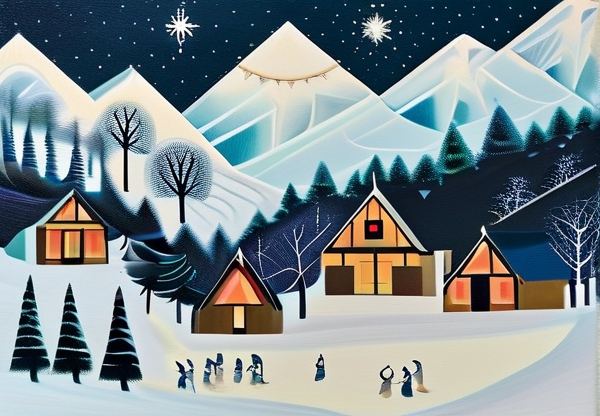
### Introduction to the Winter Solstice: A Date to Remember
On **December 20**, people across the globe immerse themselves in the annual festival of the Winter Solstice—the moment when the northern hemisphere experiences its shortest day and longest night. This astronomical event, marked by cultural celebrations for millennia, reflects humanity’s deep connection with nature’s cycles. As we observe this year’s solstice, it’s fascinating to explore how traditions evolve alongside modern scientific understanding and global environmental movements.
### The Science Behind the Solstice
Every year, the Winter Solstice occurs when the Earth’s axial tilt moves farthest from the sun in the northern hemisphere. This phenomenon, occurring precisely on **December 20–22** depending on time zones, signals the official start of winter. The alignment of stars during this period has captivated astronomers for centuries. Today, apps like **Stellarium** or NASA’s interactive tools let anyone study solstice patterns from their smartphones—an example of how technology bridges ancient wisdom and modern curiosity.
### Cultural Traditions: A Global Tapestry
From China’s Tang Dynasty midnight rituals to ancient Roman *Saturnalia* feasts, solstice celebrations highlight humanity’s shared appreciation for light and renewal. Modern iterations blend tradition with contemporary flair, such as icy installations in Sweden’s **Jukkasj?rvi Ice Hotel** or London’s Westminster candlelit processions. Notably, **December 20** in recent years has seen social media campaigns like #SolsticeSelfie, encouraging environmental pledges alongside festive joy.
### The English Perspective: Essays and Education
For students and educators, the Winter Solstice offers rich material for academic exploration. Schools worldwide assign essays on topics ranging from physics to folklore, emphasizing cross-cultural learning. A top resource, **
Introduction to Winter Solstice Essays (精选篇)**, compiles curated themes like “Science in Ancient Rituals” or “Festivals as Climate Indicators.” These guides help learners connect solstice practices to today’s sustainability goals.
### Sustainability and the Solstice: A New Legacy
This year, **December 20** coincides with heightened urgency around climate action. Many communities are adopting eco-friendly solstice traditions, such as solar-powered light installations or zero-waste feasts. For instance, the **Green Solstice Network** encourages swapping bonfires for LED “flame” lanterns, reducing emissions while preserving tradition. Such innovations remind us that respecting Earth’s rhythms remains central to the solstice’s purpose.
### Tech Meets Tradition: Innovations in 2023
Advanced technology is reshaping how we commemorate the solstice. In Tokyo, AR apps overlay digital constellations onto smartphone cameras, recreating ancient star maps. Meanwhile, virtual reality platforms let users “experience” solstice rituals across continents—fostering global empathy. EvenNASA’s live solstice astronomy broadcasts attract millions, blending education with spectacle.
### Conclusion: The Solstice’s Timeless Message
On **December 20**, the Winter Solstice reminds us that as days begin to lengthen, humanity must balance preservation with progress. Whether through essays, art, or science, our generation can honor this celestial event by addressing contemporary challenges like climate change. By merging tradition with innovation, we ensure the solstice remains a beacon of hope and connection for decades to come.
这篇文章通过多视角探讨冬至节气的科学、文化及环境意义,既涵盖传统习俗分析,亦融入如科技应用与气候行动等现代议题。特别需要强调的是,文中提到的资源链接提供了精选的英文作文范文,可供学习参考。